
Vermilion Parish Criminal Court Records
A criminal court record is the court case file. In Vermilion Parish, the Clerk of Court's Criminal Department files formal charges from the 15th Judicial District Attorney. Felony charges are handled through that court record path. Misdemeanors inside city limits may be handled by municipal or city courts, while some misdemeanors outside city limits can move through district court after a bill of information or indictment.
The court file begins after the prosecuting authority has filed a formal charge or the court has accepted the matter. It can show the charge counts, arraignment, plea, motions, hearings, disposition, sentence, and cost entries. A jail booking may happen first, but the booking record does not prove that a formal court charge was filed or that a conviction occurred. For the arrest-to-charge pathway, the companion charge page covers Vermilion Parish arrest records and court charges.
The Clerk criminal department image comes from the official Vermilion Parish Clerk criminal page.
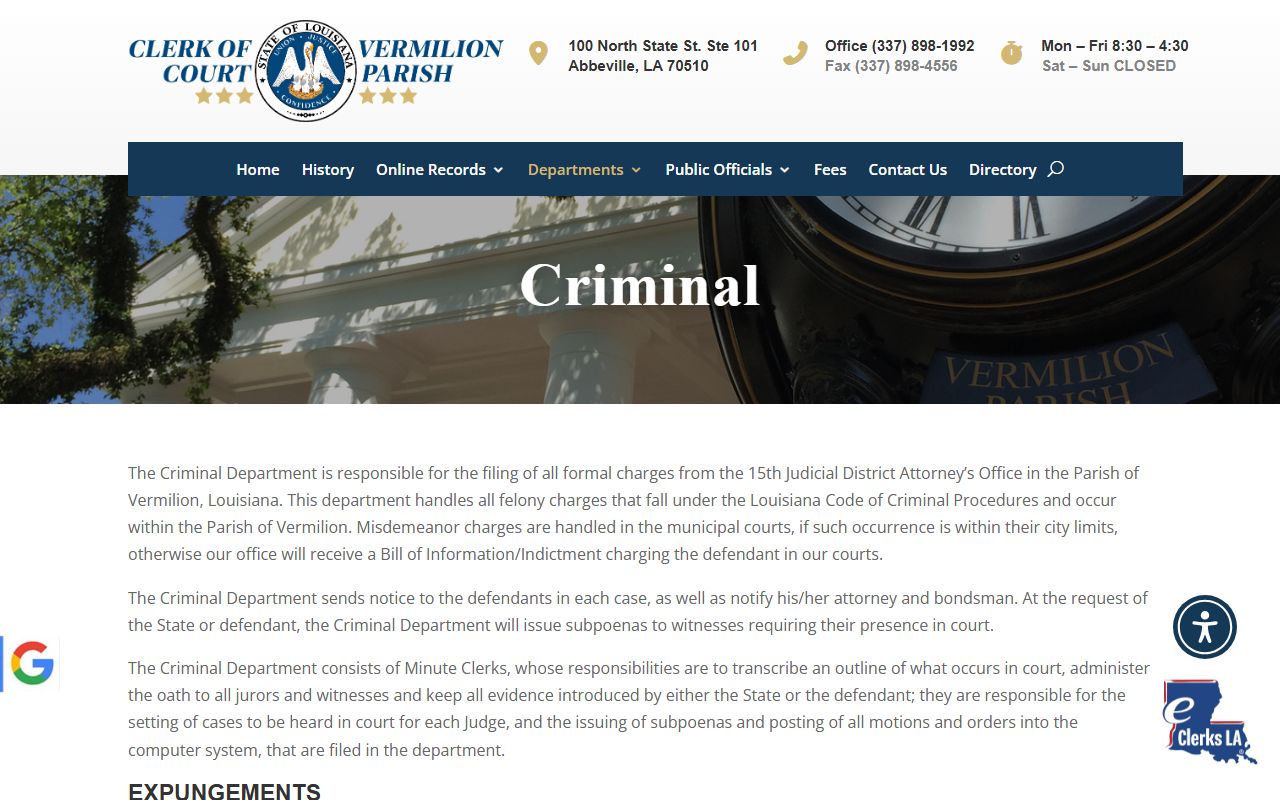
That source anchors the local distinction between felony court files kept by the Clerk and lower-level city misdemeanor matters.
Search Vermilion Parish Criminal Records
The best search path starts by identifying the court. Felony criminal court records normally point to the Vermilion Parish Clerk of Court. City misdemeanor files may point to Abbeville City Court, Kaplan City Court, or another municipal venue. Court dates and division settings may appear through the 15th JDC court calendar, while certified copies and complete file review remain Clerk functions.
- Confirm whether the case is a district court felony, district court misdemeanor, city misdemeanor, traffic-criminal matter, or municipal case.
- Use the Clerk's official online records route where the case type is indexed, noting that exact public search fields were not captured in the research environment.
- Check the 15th JDC calendar for arraignments, felony motions, felony pre-trials, jury weeks, and other criminal settings.
- Open the case record or contact the Clerk to review docket entries, charge documents, minutes, dispositions, and sentence records.
- Request certified copies from the Clerk when the record is needed for court, licensing, expungement, or official use.
The official 15th Judicial District Attorney location page confirms the DA's Vermilion Parish office in the courthouse and helps explain where prosecution decisions originate.
The DA may create or hold prosecution records, but the filed court case record is maintained by the Clerk.
Vermilion Parish Criminal Case Flow
A criminal court record changes as a case moves. The case may start with a bill of information, indictment, or other charging document. The defendant may then appear for arraignment, pretrial settings, motion hearings, plea negotiations, trial, disposition, and sentencing. Each stage can leave a docket entry, minute entry, order, pleading, or sentence document in the court file.
Case flow: Charges Filed › Arraignment › Pretrial / Motions › Plea or Trial › Disposition › Sentencing
| Stage | What Happens |
|---|---|
| Charges filed | The District Attorney files a bill of information or proceeds through indictment, and the Clerk opens the court record. |
| Arraignment | The charge is addressed in court and a plea may be entered. |
| Pretrial / motions | Parties file requests, set hearings, resolve discovery issues, or prepare for trial. |
| Plea or trial | The case is resolved by plea, trial verdict, acquittal, or dismissal route. |
| Disposition and sentencing | The court records the outcome, sentence, costs, probation, or other final terms where applicable. |
Vermilion Parish Criminal Record Fields
A full Vermilion Parish criminal court record may contain both docket data and filed documents. The research did not capture a live sample from the Clerk online portal, so the table below uses the confirmed local record categories and the common field inventory from the research file. It should not be read as a promise that every field appears in every online result.
| Field | What It Shows |
|---|---|
| Case number or docket number | The court's unique case identifier; exact district format was not confirmed from a public sample. |
| Defendant | The person accused in the criminal court file. |
| Charging document | Bill of information, indictment, or other formal charge filed into court. |
| Charge counts | Each count, statute reference, severity, amendment, reduction, or dismissal where recorded. |
| Hearings | Arraignment, motions, pretrial settings, trial dates, continuances, and status settings. |
| Plea | The formal plea entered by the defendant, if shown in the case record. |
| Disposition | The outcome of the case or charge, such as guilty plea, dismissal, acquittal, or nolle prosequi. |
| Sentence | Sentence minutes, probation terms, fines, costs, or other penalties after conviction or plea. |
Vermilion Parish Charges vs Convictions
A charge is an accusation in the court process. A conviction is an outcome after a guilty plea, verdict, or other legally recognized finding. Criminal court records can show charges that were amended, reduced, dismissed, or ended in acquittal. Reading only the charge list can give the wrong impression if the final disposition is ignored.
| Charge | Conviction | |
|---|---|---|
| Stage | Accusation filed by the prosecutor or returned by grand jury. | Final outcome after plea or trial finding. |
| Record Meaning | Shows what the State alleged at that point. | Shows the offense for which the defendant was found or pleaded guilty. |
| Can Change | May be amended, reduced, dismissed, or nolle prosequi. | May be affected by appeal, expungement, or later court action. |
| Where To Verify | Charging document and docket entries. | Disposition, judgment, and sentence minutes. |
DA Records vs Clerk Records
The 15th Judicial District Attorney decides whether to file, amend, reduce, dismiss, or proceed on charges. The Clerk keeps the filed court record after those formal charges enter the court system. That distinction matters because a DA file can include prosecution work product, investigative material, victim or witness material, and pending-case information that is not the same as a filed public court record.
The District Attorney has a separate public-records request route. The DA research page lists mail and email request channels, a $1 per page copy fee, and a money order rule. It also states that pending investigation or prosecution information and privileged work product are not provided. A Clerk file and a prosecutor file can overlap, but they are not interchangeable.
This distinction is practical for Vermilion Parish criminal court records. A filed bill of information, indictment, plea form, minute entry, sentence, or judgment should be requested through the Clerk because it is part of the court case file. A request for DA correspondence, prosecution notes, or investigative material should not be sent to the Clerk as if it were a court pleading. The DA may also withhold pending-case material, so a public-records request can produce a narrower result than the court docket.
The assigned DA request image comes from the official 15th Judicial District Attorney public records request page.
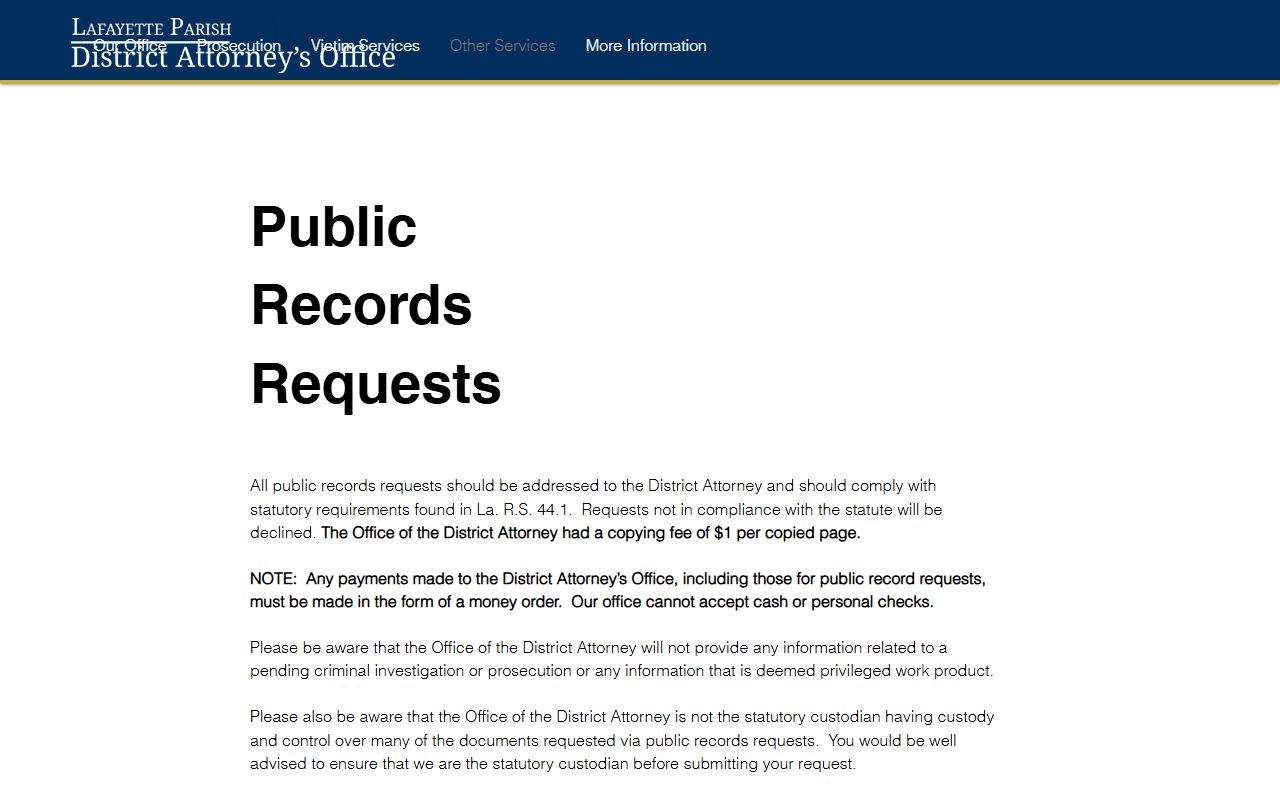
That channel is useful for DA-held records, while certified filed criminal court records still point back to the Clerk.
Access Vermilion Parish Criminal Records
Louisiana law gives broad access to public records, but criminal records have important limits. La. R.S. 44:3 limits certain law-enforcement and prosecution records while keeping initial reports, booking records, summons or citation records, and bills of information public unless another law protects them. La. R.S. 44:31 gives adults a right to inspect and copy public records, and La. R.S. 44:32 addresses custodian duties and copy fees.
Criminal court access also depends on the court that created the record. Felony matters point to the Vermilion Parish Clerk of Court after formal charges are filed. City misdemeanors may point to Abbeville City Court, Kaplan City Court, or another municipal venue. A missed city court date can lead to a local bench warrant that does not appear as a felony case in the district court file. The search route should follow the issuing court before any conclusion is drawn from a missing online result.
The law-enforcement statute image comes from Louisiana's law-enforcement and prosecution record rules.
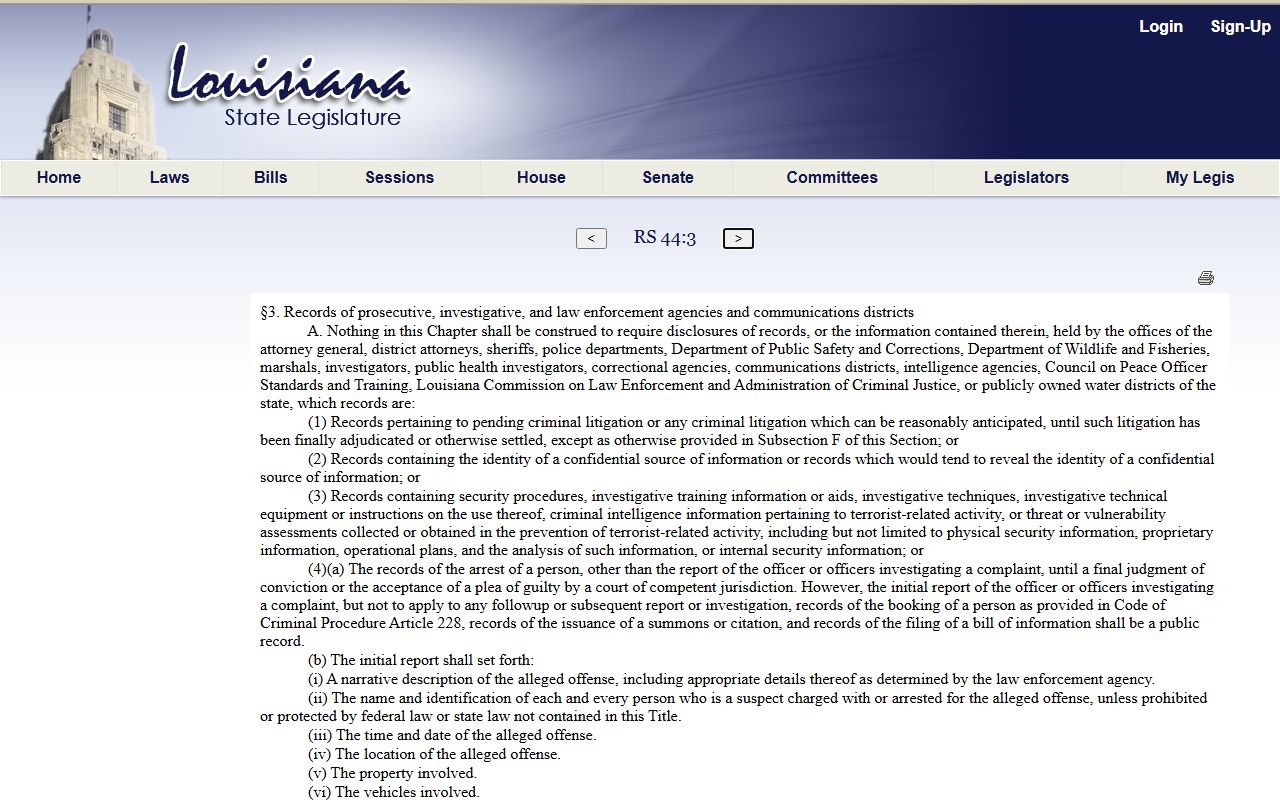
Those rules explain why a filed bill of information can be public while pending investigative material remains restricted.
Sealed vs Expunged Records
Louisiana expungement law removes eligible arrest or conviction records from public access, but it does not destroy them. A public search may show no result after an expungement even though law-enforcement, criminal justice agencies, or other authorized parties can still access the record. Sealing also keeps records outside ordinary public view unless a court order or law allows access.
| Sealed | Expunged | |
|---|---|---|
| Visibility | Hidden from ordinary public inspection by court order or law. | Removed from public access under Louisiana expungement law. |
| Record Status | Still exists in the court or agency system. | Still exists, but is not publicly available and is not destroyed. |
| Access | Limited to authorized users or court-approved access. | Available to law-enforcement or statutory agencies in allowed situations. |
| Best Verification | Clerk or court order. | Expungement order and custodian response. |
The expungement image comes from the Louisiana law source for expunged criminal records.
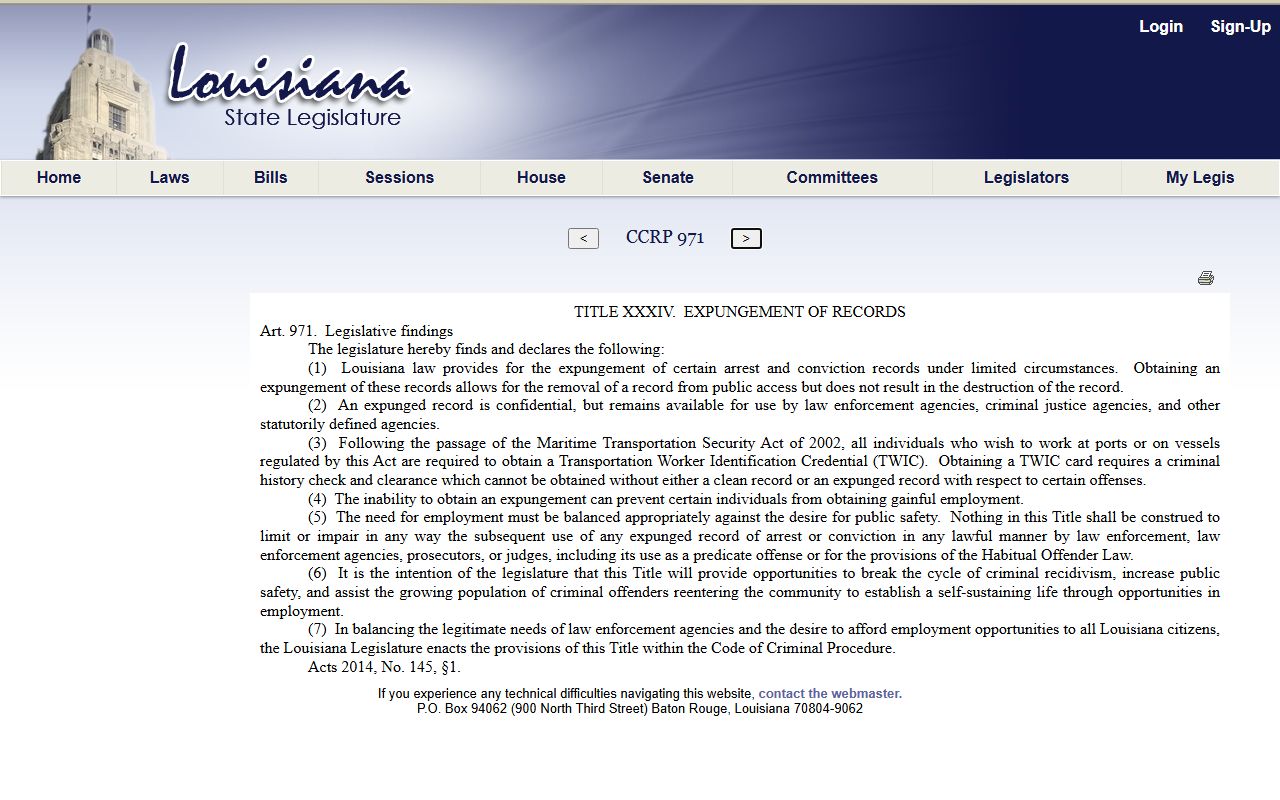
Expungement is a public-access limit, not proof that the underlying record was physically erased.
Restricted Vermilion Parish Criminal Records
Juvenile criminal and child-in-need-of-care files are not ordinary public criminal court records. The Vermilion Parish Clerk's juvenile page states that all juvenile delinquent and child-in-need-of-care filings are confidential and require a valid court order to view. Louisiana Children's Code confidentiality reinforces the point. Adoption files, victim information, minor victim names, domestic violence victim address data, and sealed or expunged matters can also be withheld or redacted.
The juvenile confidentiality image comes from the Louisiana source for juvenile record confidentiality.
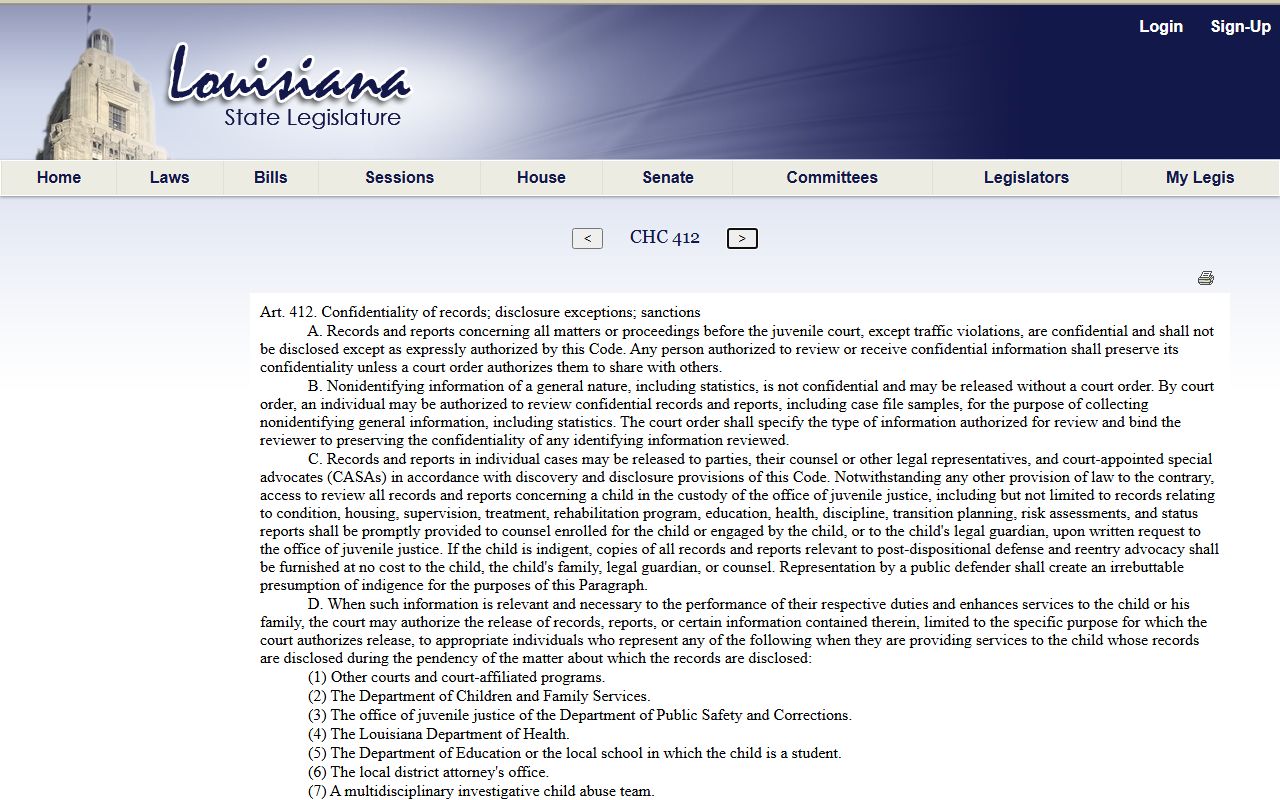
This restriction keeps juvenile court records from being treated like adult criminal court records.